Kleines Bauen und Renovieren

Compact equipment for foundations, trenching, yard renovation and small building work.
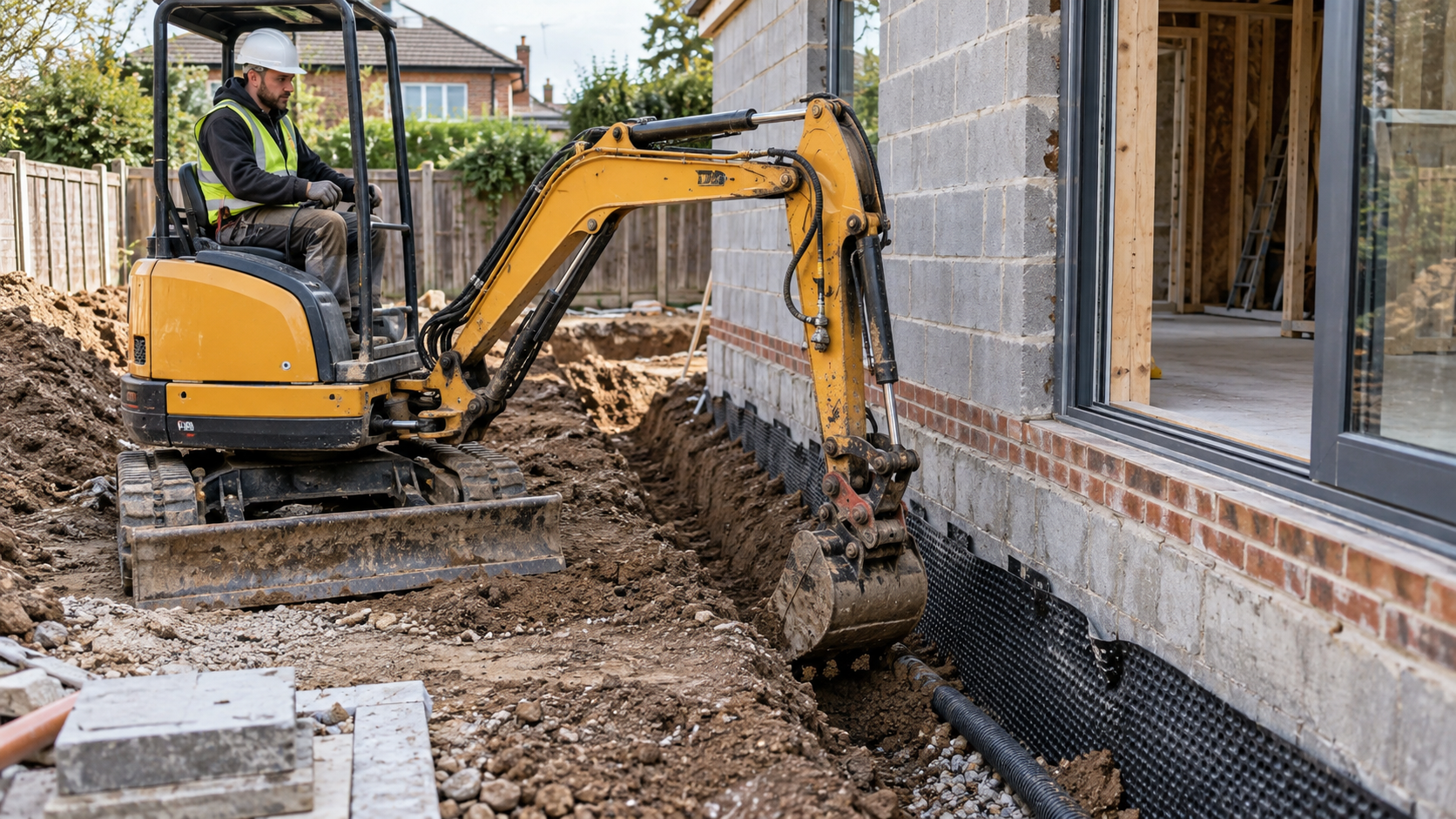
AI-generated application illustration: Compact rubber tracked mini excavator digging a narrow drainage trench alongside a modest residential extension under renovation, foundations and prepared soil, clearly confined but adequate workspace, realistic hydraulic arm and bucket, operator seated wearing hardhat.

Construction Site Application

Small construction work includes foundation excavation, yard renovation, drainage trenches, material handling and site grading. Compact tracked excavators help crews work in narrow access areas while keeping transport and operating costs practical.
Jiasheng Xinying supplies standard mini excavators, compatible attachments and configuration support for different soil conditions, working widths and project tasks.

Why Is Mechanical Equipment Necessary?

The use of construction machinery and equipment can significantly enhance work efficiency and ensure safety and construction quality.

Increase Productivity

Mechanized operations are faster and more efficient than manual labor, thereby shortening the project cycle.

Ensure Safety

Reduce risks associated with manual operations, particularly during heavy material handling and work at heights.

Improve Precision

Stable machine operation supports consistent trenching, grading and foundation preparation.

Cost Efficiency

Reduce labor requirements and material waste to maximize economic benefits.
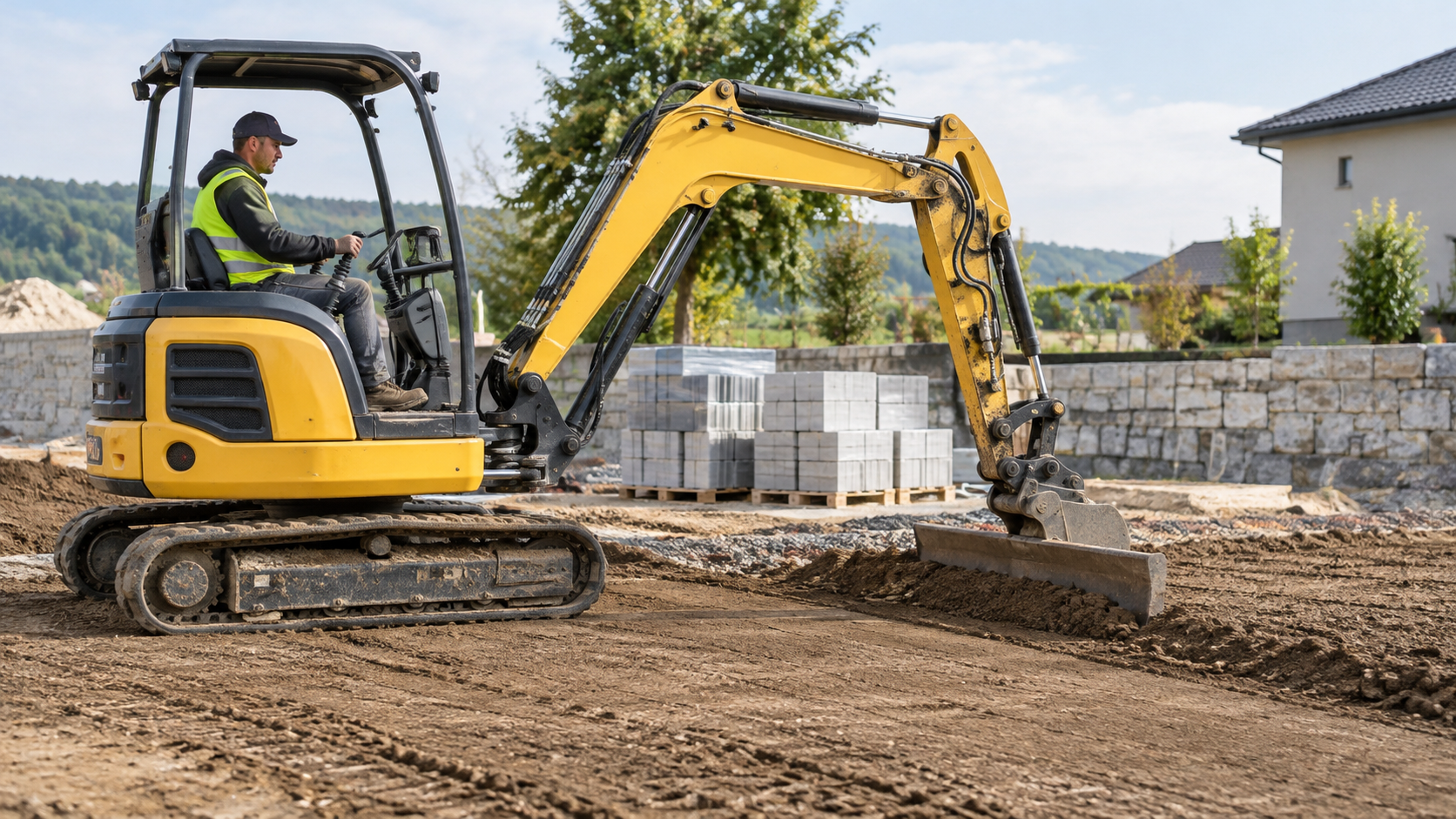
AI-generated application illustration: Side view of compact excavator efficiently grading a prepared small construction site, machine blade leveling a smooth soil strip, operator seated wearing workwear, neatly organized materials beyond, broad clean work area, high quality realistic machinery.

Common Construction Environments

Our machinery is designed for diverse construction environments, including urban sites, rural or industrial areas, high-altitude and sloped terrains, as well as underground or confined spaces.
Urban Construction Sites
Road, commercial and residential construction projects—characterized by limited space—require flexible, compact machinery.
Rural / Industrial Sites
Small industrial and rural projects need flexible equipment for earthmoving and material handling.
High-Altitude or Sloped Sites
Confirm ground conditions, machine limits and stability requirements before operation.
Underground / Confined Spaces
Trenching and foundation work in restricted areas requires small, agile machinery.

Types Of Work

Suitable for a wide range of construction tasks including earth excavation, concrete mixing and pouring, material handling, compaction, leveling, and structural assembly.

User Requirements

Customizable options and comprehensive after-sales support ensure optimal performance across all construction scenarios.
High Efficiency

Reduce risks associated with manual operations, particularly during heavy material handling and work at heights.

Safety & Reliability

Ensures operator safety and mitigates construction risks.

Precision

Guarantees precision in concrete pouring, foundation leveling, and material handling.

Customizable Solutions

Supports customized modifications, including high-altitude, crawler-mounted, and high-discharge configurations.

Easy Maintenance

Provides services such as spare parts kits, software components, online technical guidance, and on-site training.
Common Pain Points In Construction Scenarios

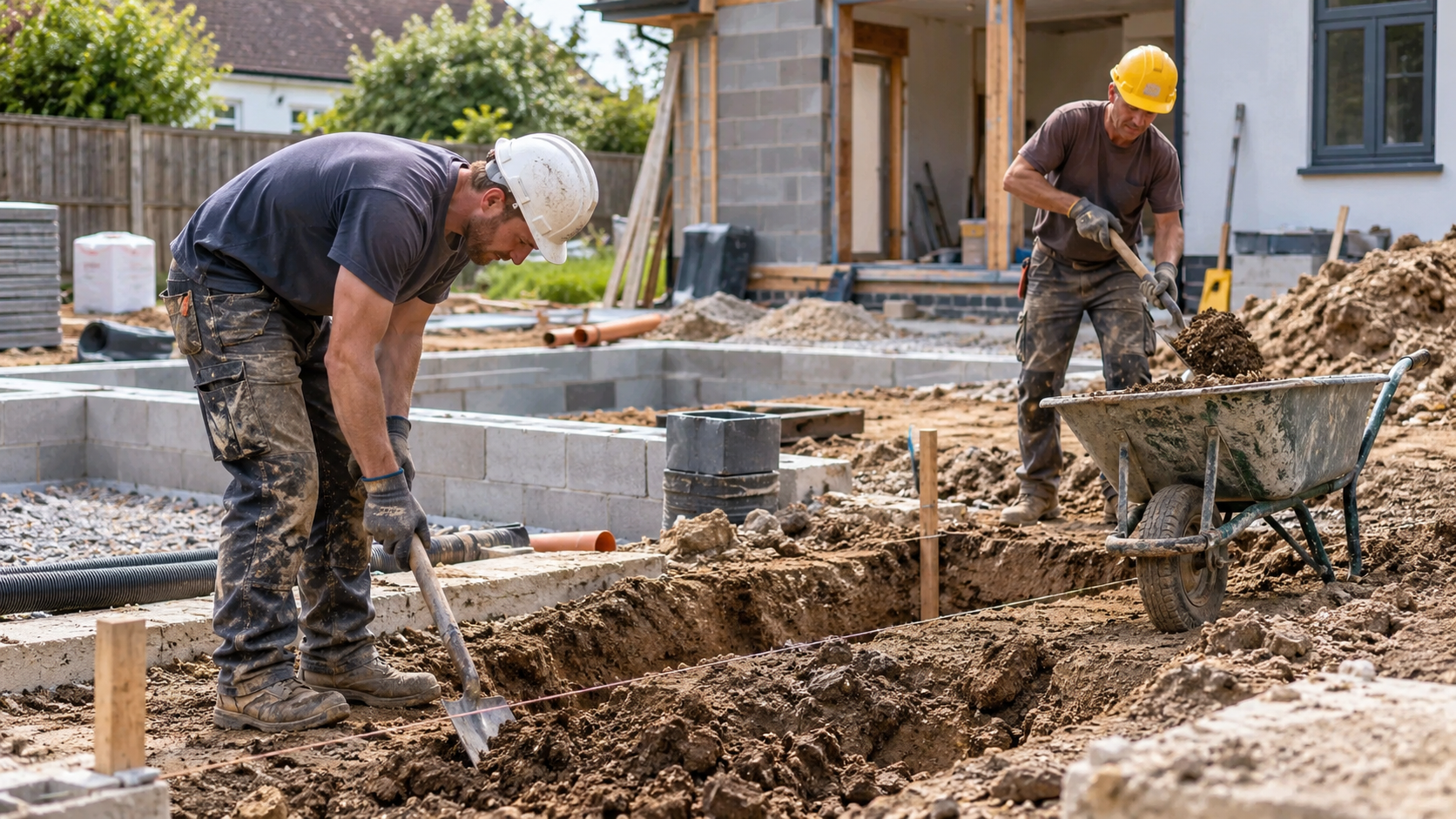
AI-generated application illustration: Two construction workers in practical safety workwear manually digging a small foundation trench with shovels and moving soil with wheelbarrow, many unfinished ground preparation tasks visible, shows labor intensive slow progress, no machinery dominating frame.
Low Productivity
Problem Description: Manual operations are time-consuming, repetitive, and physically demanding. Impact: Prolonged project duration, increases labor costs, and compromises overall project efficiency.
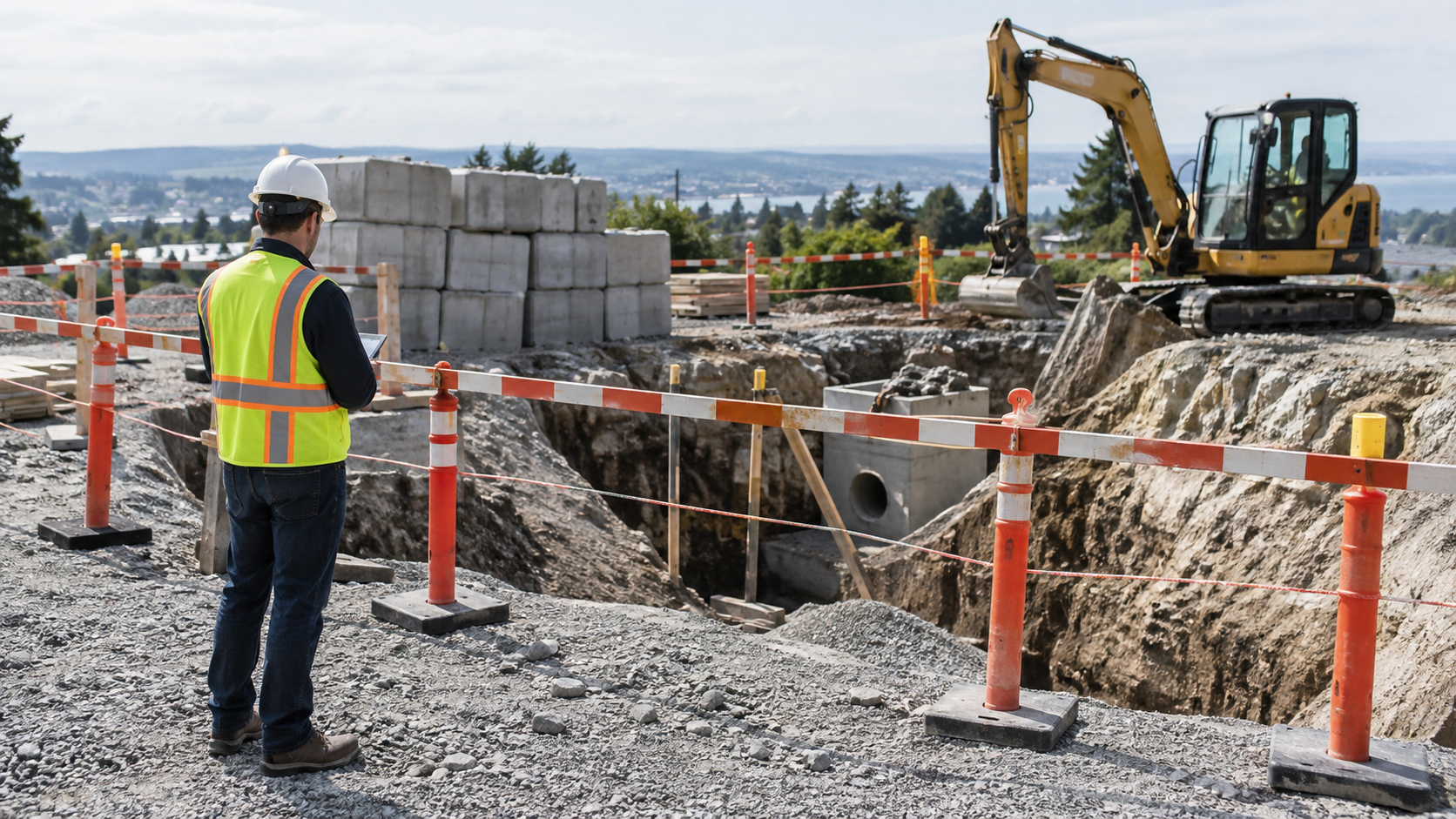
AI-generated application illustration: Construction site safety challenge shown through organized barricaded excavation, heavy stacked concrete blocks, a supervisor wearing hardhat and reflective vest reviewing work zone from safe distance, mini excavator parked beyond, clear separation, no accident or dangerous action.
High Safety Risks
Problem Description: Safety hazards exist in the handling of heavy materials, earthworks, and high-altitude operations. Impact: Prone to work-related accidents, leading to increased safety management costs.
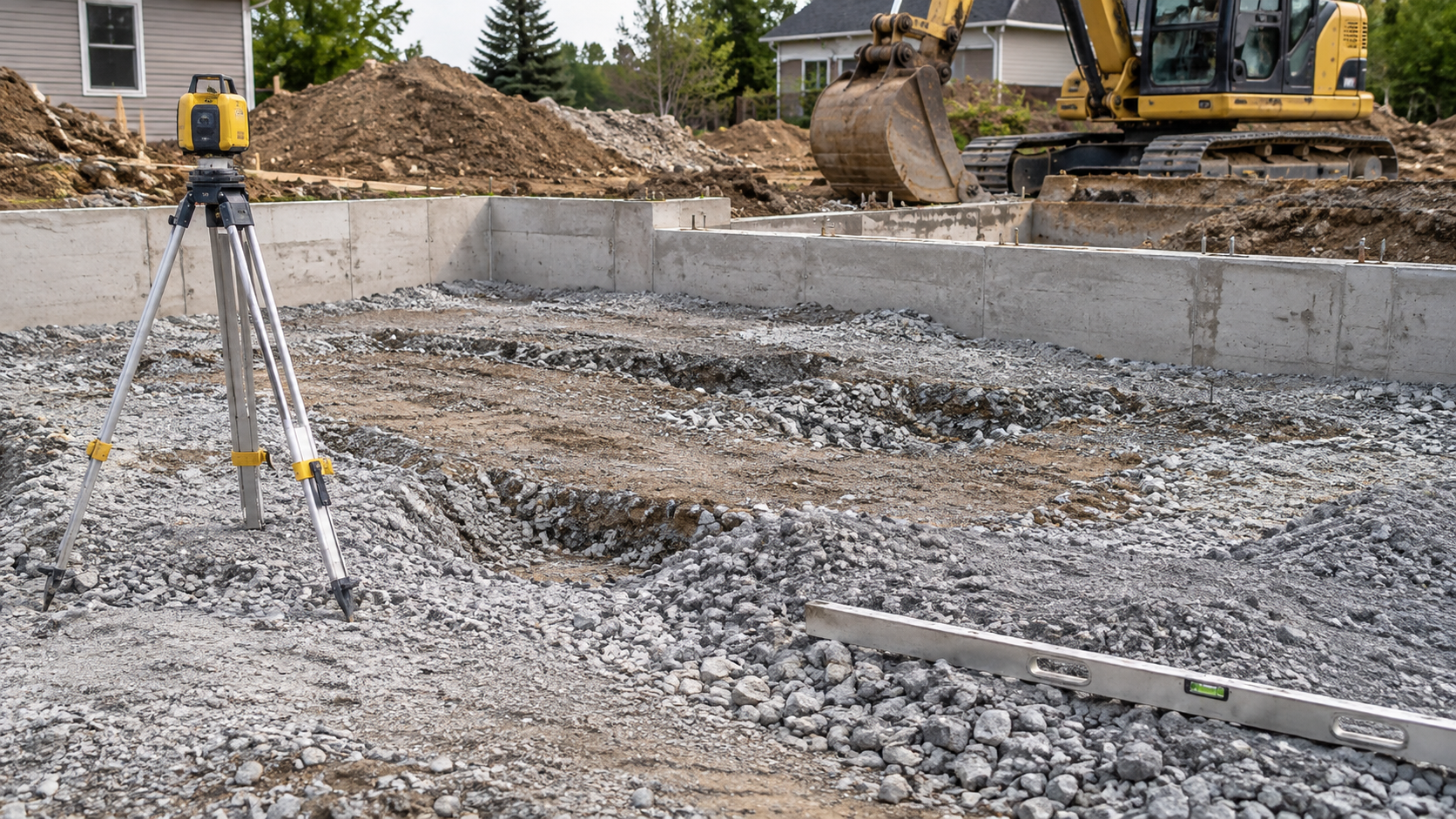
AI-generated application illustration: Close wide view of uneven unfinished foundation preparation and irregular gravel grading at a small construction project, visible low spots and inconsistent surface levels, surveying laser level on tripod and straightedge nearby, no printed writing, communicates quality inconsistency.
Inconsistent Construction Quality

Problem Description: The precision of manual operations is inconsistent, making it difficult to standardize pouring, leveling, and assembly processes. Impact: Compromises structural stability and the overall quality of the final project.
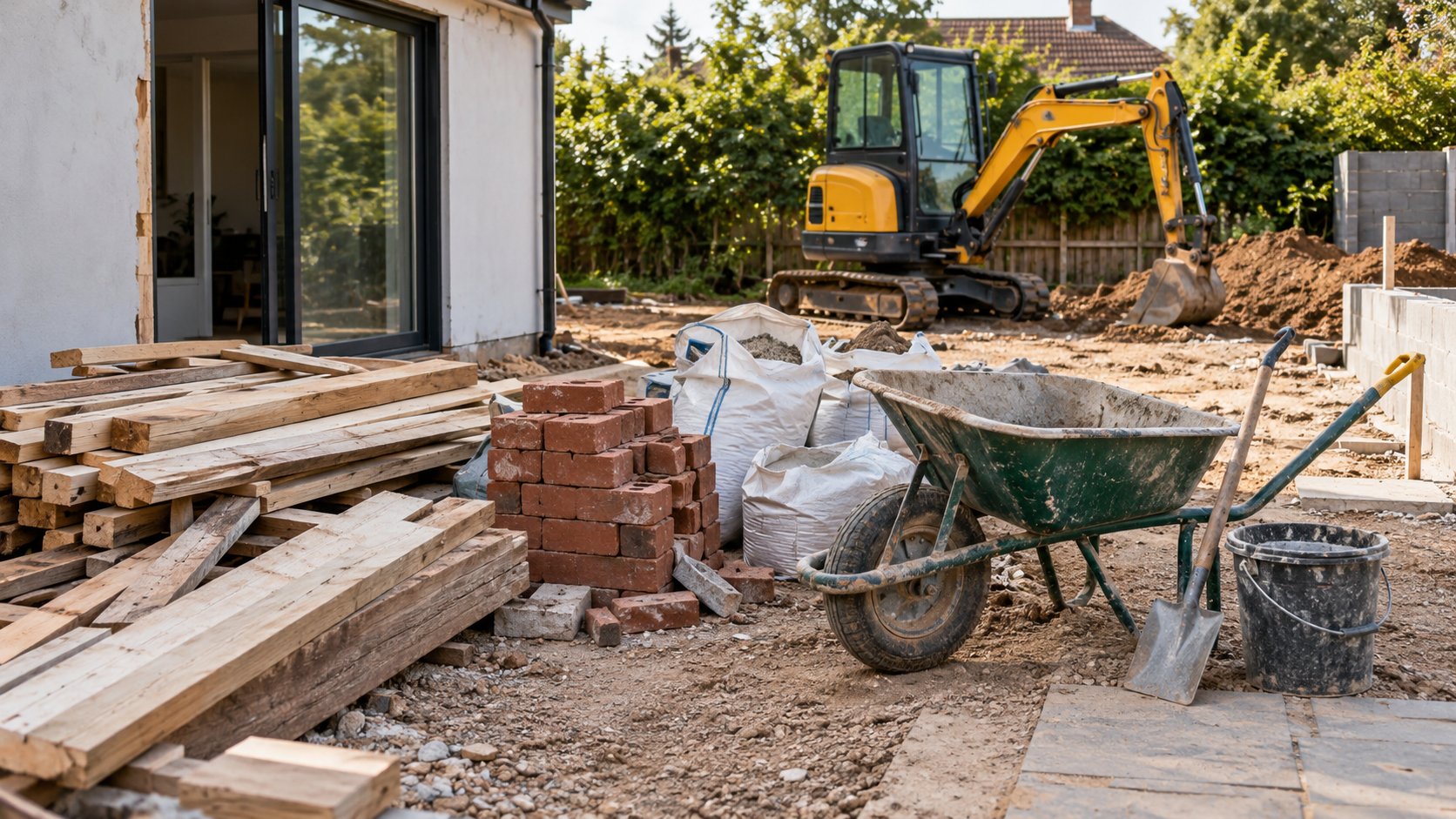
AI-generated application illustration: Small renovation site with unused offcuts of timber, leftover bricks, bags of material, wheelbarrow and service tools grouped in foreground, compact excavator parked in background, realistic material surplus and ongoing maintenance workload, no exaggerated rubbish pile or text.
High Operational Costs
Problem Description: Wastage of labor, time, and materials increases project costs. Impact: Reduces project profitability and directly affects the Return on Investment (ROI).
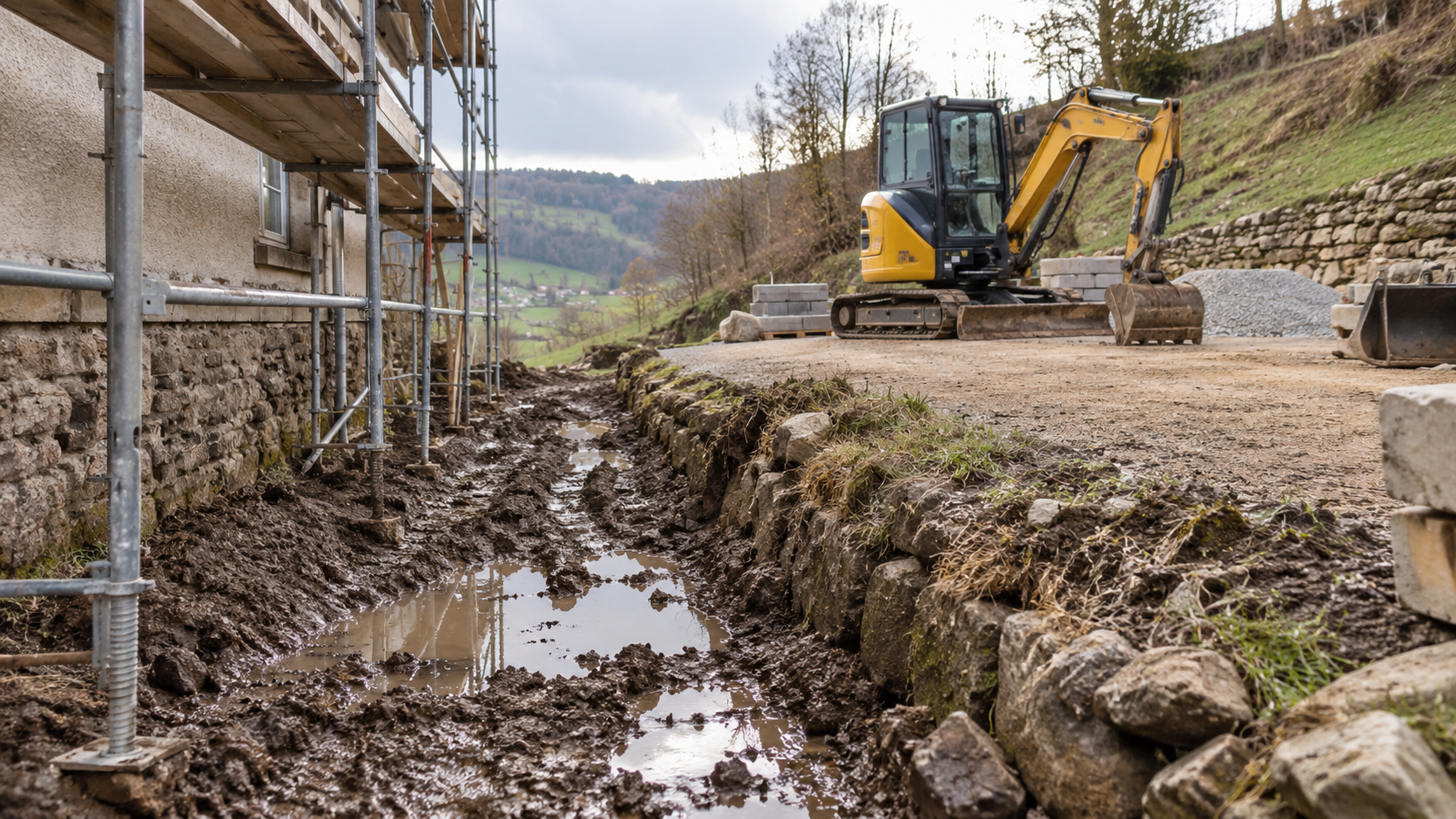
AI-generated application illustration: Challenging small construction access after rainfall: narrow rough access path beside building renovation, muddy uneven soil and shallow puddles, hillside beyond, compact excavator parked on a firm dry level platform away from mud, illustrates variable working conditions without unsafe action.
Challenging Working Conditions
Problem Description: Construction environments are highly variable—involving factors such as scaled terrain, high altitudes, and confined spaces—which impose significant limitations on traditional machinery and manual operations. Impact: Reduced operational efficiency and safety, and adverse effects on project progress.

Frequently Asked Questions

We manufacture mini excavators and intelligent remote-controlled crawler mowers. Mini excavators support trenching, planting, yard renovation and small construction; crawler mowers support vegetation maintenance in orchards, solar farms and roadside areas.
Tell us your main tasks, terrain, access width and working area. We can discuss excavator models, mower configurations and suitable attachments. Confirm the selected model’s operating limits and site conditions before use.
Depending on the model, we support engine selection, cab options, hydraulic configurations and attachments such as breakers, augers, grapples and rakes. Crawler mower fuel or hybrid versions, cutting width and blade configurations can be discussed for your requirements.
Our standardized assembly process includes component inspection and full-machine commissioning. Excavators undergo unloaded and loaded checks; crawler mowers are tested for cutting, climbing and remote-control operation before delivery.
We support both container orders and small trial orders. Mini excavators and crawler mowers can be considered for mixed container loading. The equipment package, shipping arrangements and export documents are confirmed for each destination and order.
We provide remote technical guidance, spare-parts support and product documents. Share the model, application and service requirements so our team can clarify operating guidance, maintenance needs and compatible parts.
Get a tailored quote for mini excavators and remote-controlled mowers.
官网询盘