
In this guide
A mower slope rating describes a stated capability or operating limit under particular conditions. To use the number meaningfully, you need to know its units, what activity it refers to and which machine configuration was assessed. A climbing claim is not automatically a limit for continuous mowing in every direction or ground condition.
Remote control mower slope capability explained properly starts with those distinctions. Degrees and percent are different units. Travel and cutting are different activities. A smooth dry test surface and wet uneven grass are different conditions. Until those details are clear, comparing the largest advertised numbers can lead to the wrong conclusion.
First check whether the number means degrees or percent
Slope in degrees describes the angle above horizontal. Percent slope compares the vertical rise with the horizontal distance, multiplied by one hundred. A 100 percent slope rises one unit for every unit of horizontal distance and corresponds to 45 degrees. It does not mean a vertical face.
The conversion is based on geometry: percent slope equals the tangent of the angle multiplied by one hundred. For example, a 10-degree slope is about 17.6 percent, while a 20-degree slope is about 36.4 percent. These are conversion examples, not operating recommendations for any mower.
Ask which unit a listing uses before comparing it with another listing. If a brochure shows a number without a degree symbol or percent sign, do not guess. The same-looking number can represent substantially different inclines. A handwritten site measurement also needs its unit recorded.
| Angle in degrees | Approximate percent slope | Meaning |
|---|---|---|
| 5° | 8.7% | A geometry conversion example |
| 10° | 17.6% | A geometry conversion example |
| 15° | 26.8% | A geometry conversion example |
| 20° | 36.4% | A geometry conversion example |
| 30° | 57.7% | A geometry conversion example |
| 45° | 100% | Equal vertical rise and horizontal run |
For additional background on the measurement itself, see Wikipedia's explanation of grade. The conversion helps interpret a number. It does not establish whether a particular machine should operate on the measured ground.
Ask what activity the claim describes
A machine may be described as able to climb a certain incline. That wording may refer to travel rather than cutting. Another specification may state a working limit with conditions. You need the manufacturer’s explanation and operating instructions to understand the difference.
Cutting introduces demands beyond simply moving the machine uphill. The cutting head is operating, the vegetation may resist movement and the route includes turns or obstacles. An accessory can also alter weight and balance. Do not assume that a travel demonstration establishes a complete mowing method.
The site lists several lawn mower configurations, including crawler mowers and brush cutters. Compare the exact model and offered configuration. A slope claim on one product page should not be applied to another machine because both have tracks or a similar appearance.
The surface can change the problem completely
Wet grass, loose soil, gravel, fallen leaves and exposed roots can affect traction. A mower may slide on a surface whose angle is within a published limit. The ground can also change during the day as rain starts, cuttings accumulate or repeated passes disturb the soil.
Inspect the route before mowing. A photograph taken from the top of a bank can hide a ditch, hole or abrupt change in level. Long grass can conceal the actual ground profile. If the area cannot be assessed adequately, do not use the mower to discover its shape through trial and error.
Pay particular attention to the bottom and sides of the slope. An open field below the machine is different from a pond, road, retaining edge or public path. The consequences of losing control depend on the surroundings as well as the incline. Site layout belongs in the suitability assessment.
Direction and turning need explicit instructions
Travel up and down a slope and travel across it place the machine differently relative to gravity. Turning changes the arrangement again. The permitted direction and method must come from the actual machine’s instructions and the assessment of the site. There is no universal online direction rule that makes every mower safe on every bank.
Ask the supplier to explain the route it is approving for the offered machine. Where will the mower start, turn and leave the slope? Does the operator have a suitable standing position with a clear view? If the only turning area contains a ditch or unstable edge, the plan has a problem that an impressive angle rating does not solve.
A short video of straight uphill travel does not answer these questions. Request the context of a demonstration: ground surface, direction, cutting status, attachment and conditions. A careful explanation is more useful than repeated footage of the mower reaching the top.
Remote control changes the operator's position
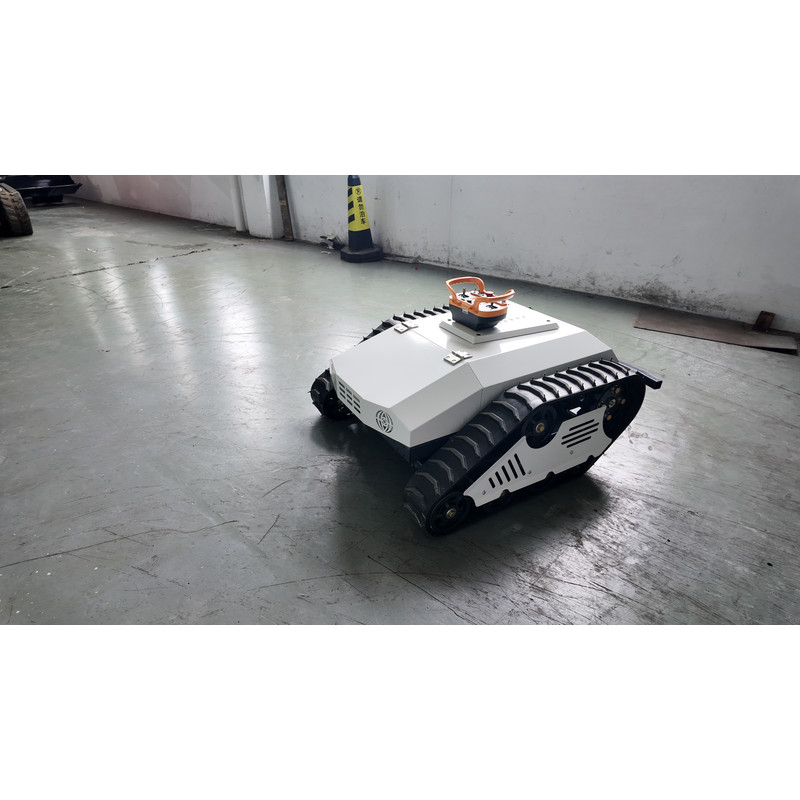
A remote controller lets the operator direct the machine without riding on it or holding mower handles. This can be useful when the machine is suitable for the site. It does not make the operator’s location unimportant. You need visibility of the mower and the area into which it could move or throw material.
Do not choose a standing place simply because the controller still connects. Radio range is a communication specification. It is not a statement that the mower should be operated at that distance through trees or behind a building. Follow the manufacturer’s requirements for visibility, separation and control.
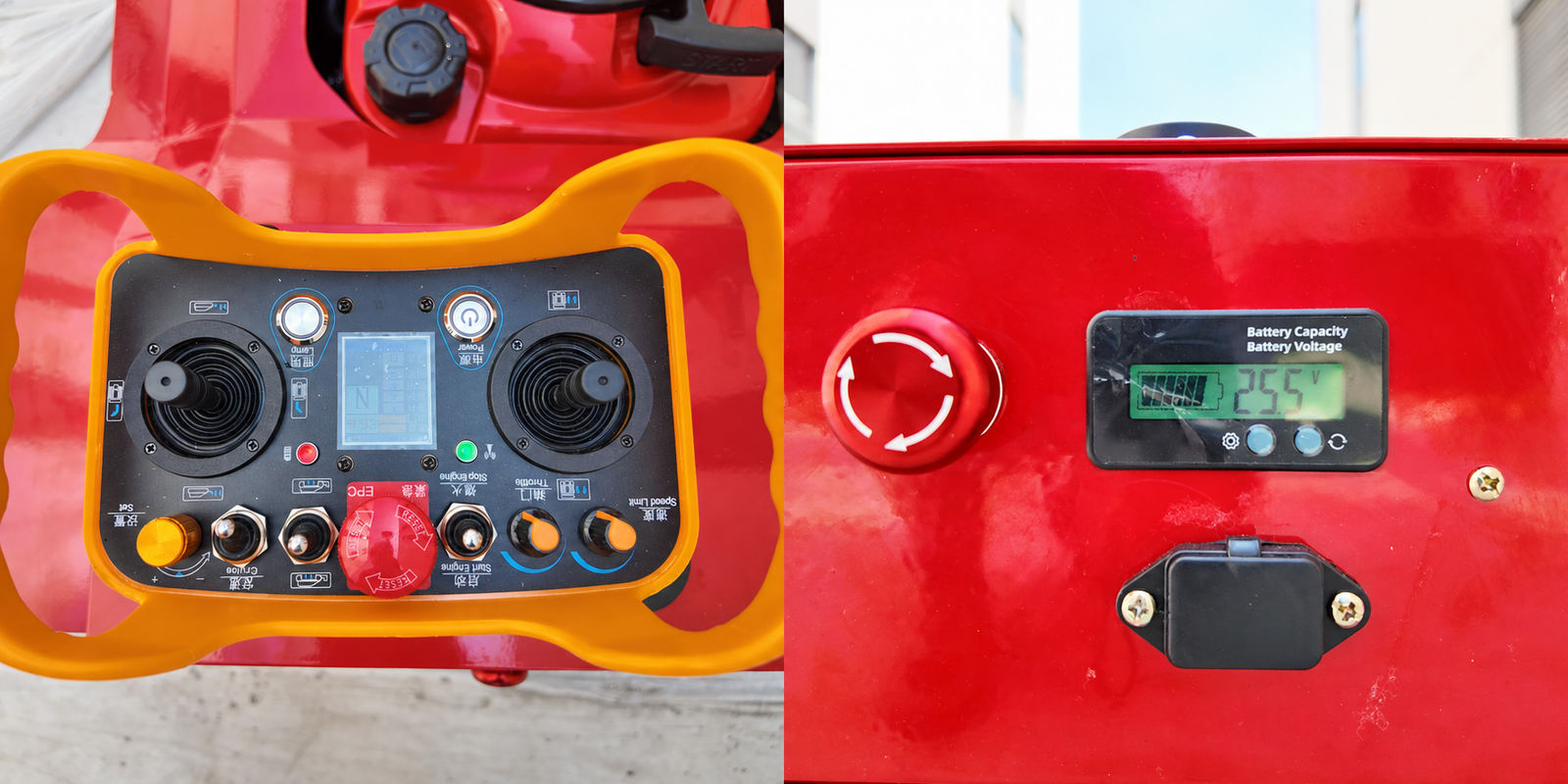
Know the actual stopping procedure before work begins. An emergency stop is a protective feature, not permission to use an unsuitable slope. It may not prevent a machine from moving because of gravity or poor ground conditions. Ask what the stopping system does and what it cannot do on the offered model.
Configuration changes need a fresh answer
A mower’s working arrangement can include different cutting widths, attachments, batteries or optional equipment. These can change dimensions, mass and balance. Confirm that the slope information applies to the complete machine being supplied, rather than a different version shown in a promotional image.
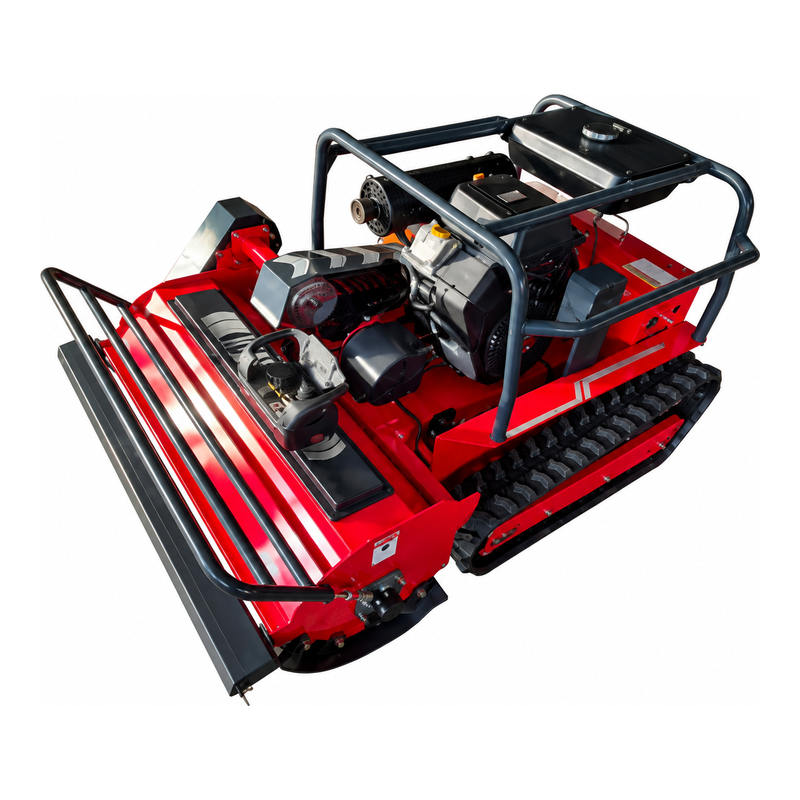
Jiasheng Xinying’s red diesel brush cutter page presents several cutting-width options. Treat those as configurations to confirm in writing. Do not infer that every option has identical behaviour on a slope or that a general product-page climbing claim covers every operating condition.
The same applies to modifications. Adding weight, changing a cutting head or using an unapproved accessory can invalidate assumptions about the original machine. Obtain manufacturer guidance before making changes that affect balance or intended use. A home-made solution should not be justified by a rating for the unmodified mower.
Build a useful site description
Record the measured incline and the method used to measure it. Show the full route, including approach, turns and exit. Photograph the surface close up and from a distance. Mark ditches, drop-offs, water, roads, walls and places where people may enter the area.
Describe vegetation height and density as well. A machine used to maintain short grass faces a different cutting task from one entering dense neglected growth. Include recent weather and known soft patches. If the site has several slopes, identify the steepest or most awkward section rather than giving one average figure for the property.
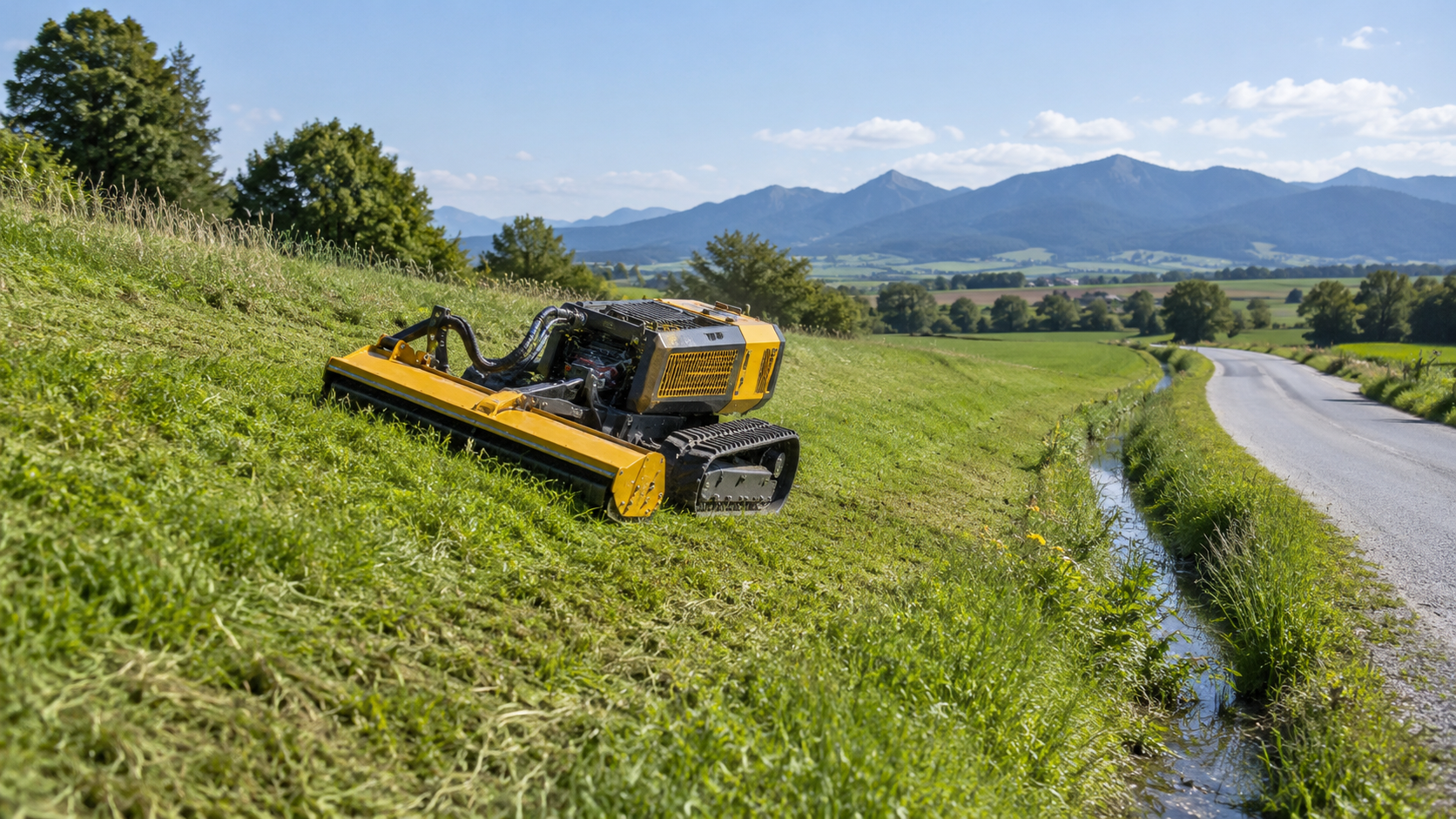
The solar sites and embankments page provides examples of relevant application settings. Those illustrations can help start a conversation, but they are not evidence that an individual site is suitable. Use your measurements and conditions to obtain advice about the actual task.
Know when the rating is not enough
If the units are missing, the conditions are unclear or the supplier cannot identify whether a figure refers to travel or mowing, pause the comparison. Ask for the manual and a written clarification. Do not fill the gaps by choosing the interpretation that makes the machine appear most capable.
Some areas may need a specialist contractor or a different vegetation-management method. An inaccessible edge, poor visibility or unstable ground can make a site unsuitable even without an extreme angle. A useful equipment discussion should be able to identify those limits as well as describe what a machine can do.
If you need model-specific advice, send your site measurements and a description of the work through the form below.
Is a 50 percent slope the same as 50 degrees?
No. A 50 percent slope corresponds to about 26.6 degrees. Percent slope compares rise with horizontal run, while degrees measure the angle. Always record the unit when measuring or comparing a site.
Does a climbing angle tell me the mowing limit?
Not necessarily. Establish what the manufacturer’s claim describes and read the working instructions for the exact model. Travel, continuous cutting, turning and direction may have different conditions or restrictions.
Can tracks prevent sliding on a bank?
No. Tracks can assist contact and traction in some conditions, but they cannot guarantee stability on wet grass, loose ground or an unsuitable slope. The complete machine, surface and route require assessment.
Is an emergency stop enough protection on a slope?
No. It is one part of the machine’s protective system. It does not make unsuitable terrain acceptable and may not prevent movement caused by gravity. Understand the exact system and follow the approved operating conditions.
What should I request before choosing a slope mower?
Request the exact configuration, manual, units and meaning of the stated rating, and the conditions under which it applies. Provide your site measurements, surface description, route, obstacles and vegetation so the advice can address the actual job.